Lube Me Tender: Water-Based vs. Silicone Lubricant

A wise philosopher once said, "Lubricant is like an umbrella. Depending on the forecast, you may not need it, but when you do, you're sure as shit glad you've got it!"
Actually, I just made that analogy up, but in truth, I am a lube expert (HI! Polly, CEO and Co-Founder here), both personally and professionally. At age 21, in 2007, I went through menopause as a result of radiation treatment for cancer. Ever since, I have been wholly, joyfully, dependent on the power and magic of lube!

WHY WE SHOULD ALL USE LUBE!
Lubricant makes sex more pleasurable in every way possible. Lubricant reduces friction, and thus pain, in all forms of penetration, making the experience far more enjoyable for all parties involved. And despite what Todd Akin might believe, our bodies are not always capable of simply flipping a switch and producing lubrication at a moment's notice.
Lubricants are not only helpful, but often necessary, when your body might not produce natural lubrication easily. There is an array of reasons that might trigger a change in your body's ability to naturally produce lubricant, including, but not limited to:
Hormonal and Life-Stage Changes:
-
Menopause and Perimenopause: Declining estrogen levels thin and dry vaginal tissues, reducing the body's ability to naturally lubricate
-
Postpartum and Breastfeeding: Low estrogen during lactation temporarily reduces the natural lubrication your body can produce
-
Hormonal Contraceptives: Certain birth controls can alter the body's ability to create lubrication
Common Treatments and Medication Side Effects:
-
Cancer therapies: Chemotherapy and radiation that beams through the pelvis can cause severe dryness and can trigger early onset menopause
-
Common medications: Antihistamines and SSRIs can also inhibit your body's arousal response and mucosal secretions
Autoimmune and Systemic Diseases:
-
Sjögren’s Syndrome: Wherein the body attacks moisture-producing glands, affecting mucosal tissues including the vagina, reducing natural lubrication
-
Lupus (Systemic Lupus Erythematosus): Can cause systemic inflammation and vascular changes impacting natural lubrication
-
Lichen Sclerosus / Lichen Planus: Chronic inflammatory skin conditions that affect the vulva and vagina can cause thinning, scarring, and severe discomfort during penetrative sex
-
Diabetes: If blood sugar isn't managed properly, it can damage nerves and small blood vessels, which are the highways our body uses to deliver lubrication
Sexual and Pelvic Floor Conditions:
- Vaginismus: An involuntary tightening of the pelvic floor muscles that makes penetration painful during sex
- Female Sexual Interest / Arousal Disorder (FSIAD): Defined as physiological or subjective difficulty in maintaining adequate genital engorgement and lubrication responses
- Dyspareunia: Estimated to impact 10-20% of women, is defined as a persistent physical pain during penetrative sex, often directly correlated with the body's inability to produce natural lubrication
WATER-BASED VS. SILICONE-BASED LUBE: WHAT'S THE DIFFERENCE?
Both water-based and silicone lubricants are extremely effective in decreasing friction and increasing comfort during penetrative sex and masturbation. Both are safe to use with latex condoms (but always double check the label to be sure!), unlike oil-based lubricants, which can degrade latex. Both water and silicone lubricants come in an array of different formulations and flavors, but they have different properties, benefits, and use cases for when-to-choose-what. Let's break it down!
Water-based lubricants:

This formulation uses water as the primary ingredient, which is then thickened with agents like glycerin, propylene glycol, or cellulose derivatives (e.g., hydroxyethylcellulose), plus preservatives to prevent bacterial growth. Because water is the base, these formulas are water-soluble, meaning they mix with and dissolve in water, which is why they wash off easily and eventually evaporate or absorb into skin.
Pros:
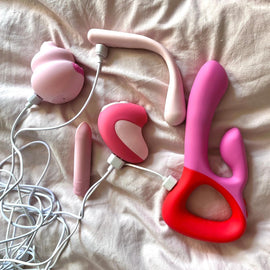
- Material Compatibility: Water-based lubricants should be used with your silicone-surfaced vibrators, dildos, and butt plugs because the materials are compatible
- Easy cleanup: Washes off easily and rarely stains fabrics like sheets
-
Affordability: Water-based lubricants tend to be a bit more affordable because the ingredients are not as expensive
-
Great for sensitive skin, but be aware of glycerin: This category of lubricants are generally less likely to cause irritation for people with sensitive skin, though some formulations contain glycerin, which can lead to yeast infections
Cons:
- Shorter-lasting: Water-based lubricants absorb into the skin much faster, so they dry out faster as well. This can require multiple applications during a single session
-
Texture: As the water-based lubricant dries, it can often feel a bit sticky or tacky unless reapplied
-
Shelf life: Water-based lubricants tend to have a shorter shelf life once opened
Silicone lubricants:
![]()
![]()

![]()
Silicone lubricants are made from silicone polymers, typically dimethicone, dimethiconol, or cyclomethicone, instead of using water as a base in the formulation. These three materials are synthetic and hydrophobic (water-repelling) compounds that don't dissolve in water and don't evaporate like water.
Pros:
- Longer-lasting: Because the base ingredients repel water instead of absorbing it, silicone-based lubricants last significantly longer than a water-based lubricant. Silicone lubricants don't require reapplication with the same frequency as water-based lubricants
- Texture and feel: Silicone lubricant has a much more silky, slippery, and rich texture that many prefer because it's less sticky once applied
- Great in water: Because silicone lubricant repels water, it's the best choice for shower or bath sex
-
Longer shelf life: Silicone lubricants tend to last longer per bottle once opened, both because they don't dry out as easily and because a little goes a long way
- Hypoallergenic (and no glycerin): This category of lubricants is considered hypoallergenic for most people and does not contain sugars like glycerin, which can lead to yeast infections for those who are easily prone to them
Cons:
- Not silicone-compatible: The most important thing to know is that you cannot use a silicone lubricant with a silicone surface. Meaning, the silicone in the lubricant formulation can degrade and warp the silicone material on your vibrator, dildo, or butt plug. Silicone lubricants are only compatible with glass, metal, or hard plastic surfaces
-
Cleanup isn't as easy: Because of its longevity and durability, silicone lubricant can be more difficult to wash off and can stain fabric. It's important to fully wash off silicone lubricant after use because it can harbor bacteria if not cleaned properly
- Slightly higher cost: The aforementioned ingredients in silicone lubricants are more expensive than a water base, so the cost can be slightly higher, but you'll use less of it over time (a little goes a long way!)
And if reading all that is way too much, here's a helpful diagram to help you figure out which-lube-to-use when:
CHOOSE YOUR FIGHTER: THE LUBE DIAGRAM

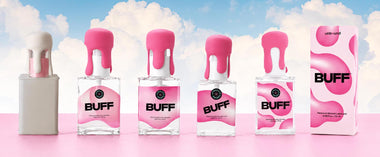
Ultimately, there's no wrong answer here, just the right answer for YOU! And honestly, I recommend keeping a bottle of both water-based Jelly and silicone-based Buff in your bedside drawer! Jelly is great for when you want a lube that plays nice with everybody in the sandbox. Reach for Buff when you want something that will go the distance. Either way, the real win is incorporating lube into your every day sexual wellbeing.
So next time the forecast calls for friction, don't wait for the storm to hit. Grab your umbrella, and get sliding!
PS - I know we're currently sold out of Jelly, but we're working on a restock and will have it back soon, I promise!

Latest Articles




Lube Me Tender: Water-Based vs. Silicone Lubricant